
What Is Pool Mastic?
Pool mastic is the flexible sealant in the expansion joint between your pool coping and deck. Its job is to help keep water and debris out while allowing the pool and deck to move separately. You may also know it as pool caulk, an expansion joint sealant, or the rubber seal around your pool.
The simple definition
Pool mastic is a flexible joint sealant installed between the pool coping and the surrounding deck. That joint exists because the pool shell and deck should not be locked together. They expand, contract, and move differently as temperatures, moisture, and soil conditions change.
In Dallas-Fort Worth, clay soil movement and hard temperature swings make that flexible joint especially important. When the mastic cracks, separates, or goes missing, water can enter the joint and reach areas that are harder to repair later.
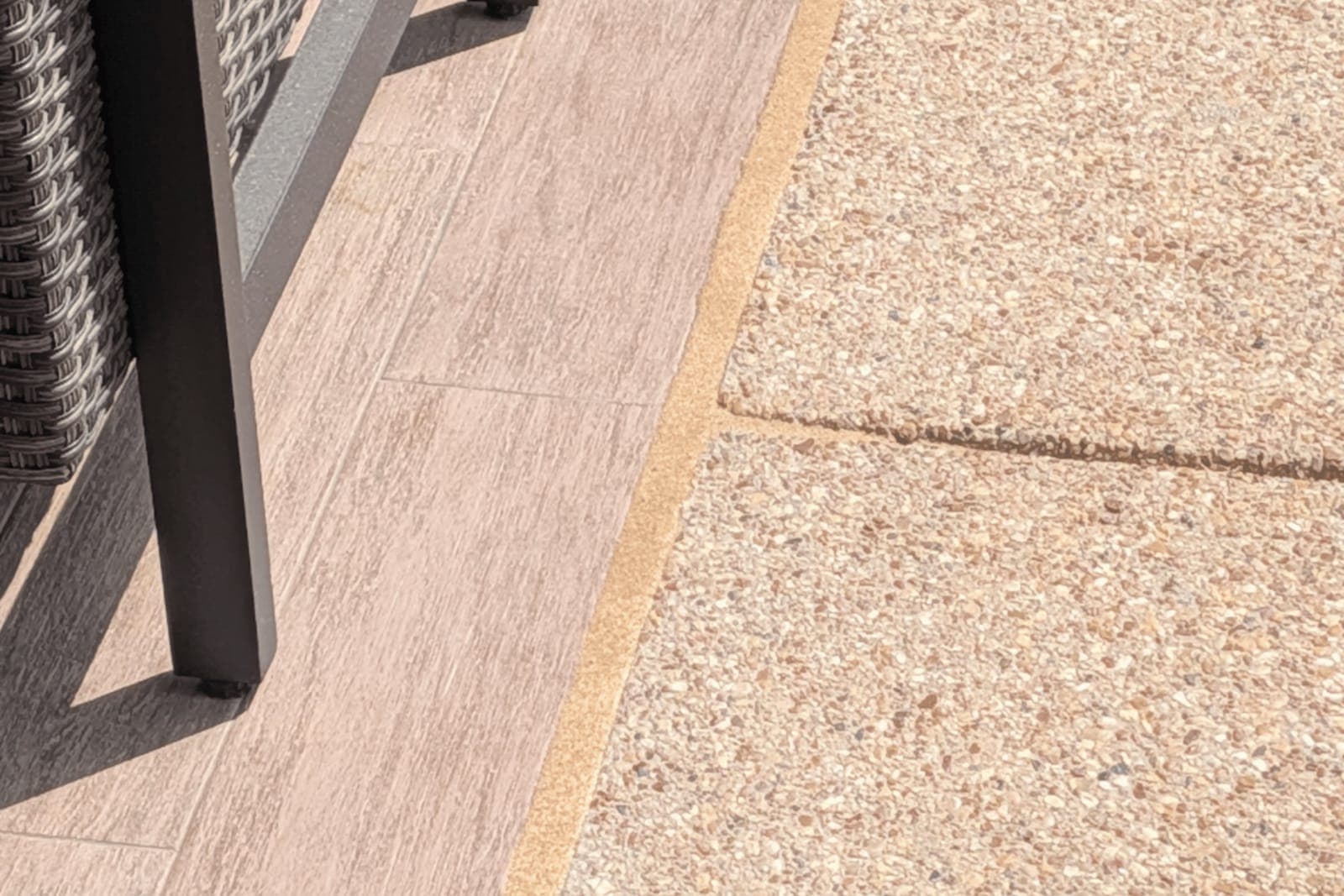
It seals a movement joint
The joint between coping and deck needs a flexible seal, not a rigid patch.
It helps block water entry
Good mastic helps keep water, ants, weeds, and debris out of the pool edge.
It wears out over time
Sun, water, movement, and age eventually make sealant hard, cracked, or loose.
Why Pool Mastic Matters
The mastic joint is a small detail doing a big job. It lets the pool shell and the deck expand and contract independently while sealing out water, ants, and debris. When it fails, water can work behind the coping and tile, reach the bond beam and the soil under your deck, and turn an inexpensive joint repair into a much larger one. In North Texas’s clay soil and extreme heat, that protection matters even more.
What pool mastic is also called
Most homeowners have never heard the word “mastic.” If you’ve searched any of these, you’re in the right place — they all describe the same flexible joint:
Wondering specifically about that rubber strip? Read what the rubber seal around a pool is called.
Signs Your Pool Mastic Is Failing
Failed mastic does not automatically mean your pool is structurally damaged. It does mean the joint is no longer doing its job and should be inspected before water intrusion creates a larger repair scope.
What Good Pool Mastic Work Includes
Pool-rated joint sealant
Products such as Deck-O-Seal and similar pool joint sealants are designed for joints that move and are exposed to pool water, sunlight, and chemicals. Manufacturer guidance matters because joint depth, backing, and cure time affect performance.
Backer rod or proper backing
Backing controls sealant depth and helps the material flex correctly. Manufacturers commonly recommend a width-to-depth relationship instead of filling a deep joint solid with sealant.
Clean, prepared joint walls
New mastic should not be installed over loose, dirty, wet, or failing material. Removal and prep are a major part of a professional replacement.
Pool Mastic FAQ
Why is pool mastic important?
Pool mastic seals the expansion joint between your pool coping and deck so the two can move independently while keeping water, ants, and debris out. Without it, water can work behind the coping and tile and reach the bond beam and the soil under your deck, turning an inexpensive joint repair into a much larger one.
What is the rubber seal around a pool called?
That flexible strip between the coping and deck is pool mastic, also known as an expansion joint sealant, pool joint filler, coping-to-deck sealant, or simply pool caulk. Deck-O-Seal is one common brand name people use for it.
Is pool mastic the same as caulk?
Homeowners often call it caulk, but pool mastic should be a flexible joint sealant suited for pool coping/deck movement, sun exposure, and water contact. Regular household caulk is not the right comparison.
Where does pool mastic go?
It goes in the expansion joint between the pool coping or bond beam edge and the surrounding concrete deck, pavers, stone, or patio surface.
How long does pool mastic last?
In the Dallas-Fort Worth climate, pool mastic typically lasts about 5 to 7 years before it needs replacement. Intense UV, clay-soil movement, irrigation overspray, and pool chemicals can shorten that timeline, which is why installation quality and material choice matter.
How much does pool mastic replacement cost?
Pool mastic replacement in Dallas starts around $7 per linear foot. Most standard residential pools run about $500 to $1,200 for a full perimeter replacement, with a $500 minimum. Joint size, condition, and material choice affect the final price.
How long does pool mastic take to cure?
Cure time depends on product, temperature, humidity, and joint size. Some two-part polysulfide pool sealants are tack-free in hours and cure around 24 hours in standard conditions, while one-step products can take several days. Always follow the product used on your job.
Can I replace pool mastic myself?
Small, clean, simple joints can be DIY projects for careful homeowners. Deep joints, loose coping, active water intrusion, messy old material, or uneven joint widths are better handled professionally because prep and depth control matter.
Need Your Pool Mastic Checked?
Dallas Mastic removes failed joint material, prepares the coping/deck joint, and installs flexible pool-rated sealant for DFW pool conditions.